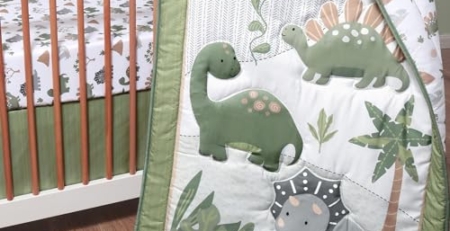
What to Look for in Safe, Breathable Crib Bedding
Setting up your baby’s crib is one of those big “this is really happening” moments. The tiny mattress, the soft sheets, the colors you’ve imagined for months—it all starts to feel real. But once you start shopping, it quickly becomes confusing: organic vs. bamboo, “breathable” vs. “cooling,” full bedding sets vs. simple basics.
Underneath all the marketing, one thing matters most: your baby’s sleep environment needs to be safe, breathable, and practical for real life. This guide walks you through exactly what to look for in crib bedding so you can feel confident every time you lay your baby down to sleep.
Quick summary: Key things to look for
- Firm, flat mattress: No sagging, no pillow-top, no soft toppers.
- Snug fitted sheet only: No loose blankets, pillows, bumpers, or stuffed toys in the crib.
- Breathable fabrics: Lightweight cotton or muslin are great options for airflow.
- Correct fit: Sheet must fit tightly around the mattress with no bunching or loose corners.
- Minimal layers: One fitted sheet over the mattress (and optionally a thin, snug waterproof protector underneath).
- Safety first, style second: You can still have a beautiful nursery without adding unsafe soft items to the crib.
Who this guide is for
This guide is designed for:
- Expecting parents setting up a nursery for the first time and feeling overwhelmed by options.
- Parents of newborns who want to double-check that their current crib setup is safe and breathable.
- Nursery shoppers and gift-givers trying to choose bedding that’s actually useful (and not just pretty in photos).
- Parents updating a second-hand crib and wondering what needs to be replaced or upgraded.
If you’ve ever looked at a styled nursery photo and thought, “That looks gorgeous, but is it safe?”—you’re exactly who this guide is for.
Understanding safe, breathable crib bedding
What “breathable” really means
“Breathable” gets used a lot in baby product marketing, but it’s not a regulated term. In the context of crib bedding, it usually means:
- Airflow: The fabric allows air to move through it more easily than thick, heavy materials.
- Lightweight feel: The sheet doesn’t trap as much heat against your baby’s skin.
- Moisture management: Some fabrics help wick away sweat so your baby doesn’t feel clammy.
Breathable bedding is about comfort and temperature regulation. It does not replace safe sleep rules. Even if a product is marketed as “breathable,” you still want:
- A firm, flat mattress
- A single, snug fitted sheet
- No loose blankets, pillows, bumpers, or plush toys in the crib
Safe sleep basics to keep in mind
When you’re choosing crib bedding, it helps to keep the core safe sleep principles in the back of your mind. Pediatric guidance emphasizes:
- Back to sleep: Always place your baby on their back for every sleep.
- Firm, flat surface: No soft mattresses, wedges, or inclined sleepers.
- Bare crib: Only a fitted sheet on the mattress—no extra bedding for babies under 12 months.
Once you know that “bare is best,” it becomes much easier to ignore the extra pieces in crib bedding sets and focus on what actually matters.
The only crib bedding you really need
1. A safe crib mattress
Technically, the mattress isn’t “bedding,” but it’s the foundation of everything. A safe mattress should be:
- Firm: When you press down, it should spring back quickly and not leave a deep indentation.
- Flat: No built-in incline, wedges, or pillow-top layers.
- Correct size: It should fit snugly in the crib with no gaps at the sides or corners.
Parents often worry that a firm mattress seems uncomfortable, but for babies, firmness is a safety feature. In real nursery setups, babies sleep very well on firm surfaces when the rest of the environment is calm and consistent.
2. A snug, breathable fitted crib sheet
This is the main piece of crib bedding you’ll interact with every day. A safe, breathable fitted sheet should:
- Fit your mattress exactly: Standard crib mattresses are usually around 28″ x 52″, but always check your mattress size and the sheet label.
- Have strong all-around elastic: Not just at the corners—elastic should run 360° around the edge.
- Pass the “tug test”: When you pull firmly at the corners, the sheet should stay in place and not pop off.
- Be made from breathable fabric: Cotton, organic cotton, or muslin are popular choices.
Parents often find that having 2–4 fitted sheets works best: one on the crib, one in the wash, and one or two backups for middle-of-the-night changes.
3. Optional: A thin, snug waterproof mattress protector
A waterproof protector can save your mattress from leaks and spit-up. To keep it safe and breathable:
- Choose a thin, flexible protector: Avoid thick, padded toppers that add softness.
- Make sure it fits tightly: It should lie flat with no bunching under the fitted sheet.
- Look for “breathable” or “air-permeable” designs: Many modern protectors use materials that block liquid but still allow some airflow.
The protector always goes under the fitted sheet, never on top of it.
Crib bedding items to avoid for safety
Many traditional crib bedding sets include items that are not recommended for babies under 12 months. These may look cozy, but they add unnecessary risk.
Items you should skip in the crib
- Loose blankets: Even lightweight blankets can bunch up near your baby’s face.
- Pillows and head positioners: Babies don’t need pillows, and they can be dangerous in a crib.
- Crib bumpers (including “breathable” bumpers): These can pose suffocation and entrapment risks.
- Quilts and comforters: These are better saved for later toddler years or used outside the crib.
- Stuffed animals and plush toys: Cute for photos, but not for sleep.
If you love the look of coordinated bedding, you can still use many of these items as nursery décor—folded over a rocking chair, hung on a wall, or used during supervised awake time. They just shouldn’t be in the crib while your baby is sleeping.
Best materials for safe, breathable crib bedding
Cotton crib sheets
Cotton is the classic choice for a reason. It’s widely available, easy to wash, and naturally breathable.
Pros:
- Breathable and comfortable in most climates
- Durable and holds up well to frequent washing
- Available in a huge range of colors and patterns
Cons:
- Some weaves can feel a bit crisp at first (though they usually soften over time)
- Lower-quality cotton may shrink or lose shape if not washed carefully
Organic cotton crib sheets
Organic cotton is grown with stricter standards around pesticides and chemicals. Many parents choose it for peace of mind, especially if their baby has sensitive skin.
Pros:
- Gentler on sensitive skin for some babies
- Often certified by standards like GOTS or OEKO-TEX
- Still breathable and easy to care for
Cons:
- Usually more expensive than conventional cotton
- Quality can still vary—certifications matter more than just the word “organic” on the label
Muslin crib sheets
Muslin is a lightweight, loosely woven cotton fabric. It’s especially popular in warmer climates or for babies who tend to run hot.
Pros:
- Very breathable and airy
- Softens beautifully with washing
- Great for warm rooms or summer months
Cons:
- Can feel too cool in colder climates if the room isn’t well heated
- Some muslin sheets may stretch or lose shape if they’re very loosely woven
Bamboo and bamboo-blend crib sheets
Bamboo-based fabrics (often labeled as bamboo viscose or rayon from bamboo) are known for being very soft and smooth.
Pros:
- Silky, soft feel that many parents love
- Often marketed as moisture-wicking and cooling
Cons:
- Can be more stretchy, which sometimes affects how snugly they stay on the mattress
- May require more delicate washing to maintain softness and shape
In real nursery setups, parents often find that cotton or muslin sheets are the easiest to live with day-to-day, while bamboo can be a nice “extra” if you love the feel.
How to check if crib bedding is truly breathable
Simple at-home checks
You don’t need special equipment to get a sense of how breathable a crib sheet is. You can:
- Hold it up to the light: If you can see a bit of light through the weave, it’s usually more breathable than a very dense, heavy fabric.
- Feel the weight: Lightweight, thinner fabrics tend to allow more airflow than thick, heavy ones.
- Do a “cheek test”: Hold the fabric gently against your cheek. Does it feel cool and light, or warm and heavy?
Remember, though, that even the most breathable sheet still needs to be used on a firm, flat mattress with no extra bedding in the crib.
Realistic nursery scenarios (and what to do)
Scenario 1: The beautifully styled crib
You’ve set up the nursery, and the crib looks like something from a magazine: matching bumper, quilt draped over the side, a couple of plush toys, and a decorative pillow.
What to change for safe, breathable sleep:
- Remove the bumper, quilt, pillow, and plush toys from the crib for sleep.
- Keep the fitted sheet on the mattress and ensure it’s snug.
- Use the quilt and plush toys as décor on a chair or shelf instead.
Scenario 2: The warm nursery
Your baby’s room tends to run warm, especially in summer, and you’re worried about overheating.
What can help:
- Choose a lightweight, breathable sheet—muslin or light cotton works well.
- Dress your baby in a season-appropriate sleep sack instead of adding blankets.
- Keep the crib away from direct sunlight or heating vents if possible.
Scenario 3: The middle-of-the-night sheet change
It’s 2 a.m., there’s been a diaper leak, and you’re changing the sheet half-asleep.
What makes this easier:
- Keep a spare fitted sheet and protector within arm’s reach of the crib.
- Use sheets that are easy to stretch on and off but still fit snugly.
- Some parents layer: mattress protector + fitted sheet + second protector + second fitted sheet, so they can peel off the top layer in a hurry. If you do this, make sure each layer is thin and snug so the surface stays firm and flat.
Practical shopping checklist for safe, breathable crib bedding
Before you buy
- Measure your mattress: Confirm whether it’s a standard or mini crib size.
- Decide on fabric type: Cotton, organic cotton, muslin, or bamboo based on your climate and preferences.
- Plan your quantity: Aim for at least 2–4 fitted sheets.
When you’re looking at product details
- Check the size: The sheet should clearly state it fits your mattress size.
- Look for all-around elastic: Not just corner elastic.
- Scan for certifications: Labels like OEKO-TEX or GOTS can be a plus if you’re concerned about chemicals.
- Read washing instructions: You’ll be washing these often—simple care is a big advantage.
After it arrives
- Wash before first use: This softens the fabric and removes any residues from manufacturing.
- Test the fit: Put the sheet on the mattress and tug firmly at the corners and sides.
- Check the surface: Make sure the sheet lies flat with no wrinkles or bunching.
Safety considerations parents often ask about
Do I need “breathable” branded products?
Many products are marketed as “breathable,” especially bumpers and padded accessories. For crib bedding, the safest approach is still a firm mattress and a single fitted sheet. You don’t need extra padded items in the crib, even if they’re labeled as breathable.
Is a thicker, plush sheet safer or more comfortable?
Thicker doesn’t mean safer. In fact, very plush or padded sheets can reduce the firmness of the sleep surface. A smooth, snug, relatively thin sheet over a firm mattress is both safe and comfortable for babies.
What about seasonal bedding changes?
You can absolutely adjust bedding choices with the seasons, as long as you keep the crib itself bare. In cooler months, you might choose a slightly heavier cotton sheet and a warmer sleep sack. In warmer months, a muslin or lightweight cotton sheet and a lighter sleep sack can help keep your baby comfortable.
Common mistakes to avoid with crib bedding
- Buying full bedding sets for newborns: Many sets include bumpers, quilts, and pillows that aren’t safe for sleep.
- Using loose blankets in the crib: Even small, thin blankets can bunch up near your baby’s face.
- Choosing sheets that are “almost” the right size: If they’re too loose, they can come off the mattress or bunch up.
- Layering too many soft items: Thick mattress pads, plush toppers, and heavy sheets can make the surface less firm.
- Prioritizing looks over function: It’s tempting to match everything perfectly, but safety and practicality matter more than the perfect photo.
Parents often find that once they simplify the crib setup, daily life actually gets easier—less to wash, less to adjust, and fewer worries at bedtime.
Key takeaways
- Keep the crib simple: A firm mattress and a snug fitted sheet are the core of safe, breathable crib bedding.
- Focus on fit and fabric: Breathable materials like cotton or muslin and a tight fit around the mattress are more important than fancy features.
- Avoid extra soft items: No bumpers, pillows, quilts, or loose blankets in the crib for babies under 12 months.
- Plan for real life: Have multiple fitted sheets and, if you like, a thin waterproof protector to handle leaks and spills.
- Style the nursery safely: Use decorative pieces outside the crib while keeping the sleep space itself bare and secure.
Helpful conclusion
Choosing safe, breathable crib bedding doesn’t have to be complicated. When you strip away the marketing and the styled photos, the essentials are surprisingly simple: a firm mattress, a well-fitting sheet, and a bare crib. From there, you can build a nursery that feels calm, cozy, and very “you” using décor, wall art, lighting, and textiles outside the crib.
Parents often say that once they understand what truly matters for safe sleep, they feel more confident ignoring products that don’t align with those principles. Your baby doesn’t need a lot of bedding to sleep safely—they just need a thoughtfully prepared, simple sleep space and a consistent routine.
As you keep exploring nursery ideas, you might also find it helpful to read more focused guides on topics like choosing the best crib sheets, understanding crib mattress firmness, or planning a cohesive nursery design that still follows safe sleep guidelines. Building that bigger picture can make every decision—from fabrics to colors—feel more intentional and less overwhelming.
FAQ: Safe, breathable crib bedding
Q: What is the safest bedding for a newborn’s crib?
A: For a newborn, the safest setup is a firm, flat crib mattress with a single, snug fitted sheet. There should be no loose blankets, pillows, bumpers, or stuffed animals in the crib. If you want extra protection for the mattress, you can add a thin, tight-fitting waterproof protector underneath the sheet.
Q: How many crib sheets do I really need?
A: Most parents find that 2–4 fitted crib sheets work well. One is on the crib, one is in the wash, and one or two are backups for unexpected messes. If you don’t do laundry often or your baby has frequent leaks or spit-up, having an extra sheet or two can make life easier.
Q: Are “breathable” crib bumpers safe to use?
A: Even when marketed as “breathable,” crib bumpers are not recommended for safe sleep. They add soft material to the crib that isn’t necessary and can increase the risk of suffocation or entrapment. A bare crib with a firm mattress and fitted sheet is safer than a crib with any type of bumper.
Q: Which fabric is best for breathable crib sheets?
A: Cotton and muslin are popular choices for breathable crib sheets. They’re lightweight, allow good airflow, and are easy to wash. Organic cotton can be a nice option if you’re concerned about chemicals or your baby has sensitive skin. Bamboo fabrics can also feel very soft and cool, but they may be stretchier, so it’s important to check that they still fit snugly.
Q: Do I need different crib bedding for summer and winter?
A: You can use the same basic setup year-round—a firm mattress and fitted sheet—but adjust your baby’s clothing and sleep sack for the season. In warmer months, a lightweight cotton or muslin sheet and a lighter sleep sack work well. In cooler months, a slightly heavier cotton sheet and a warmer sleep sack can help keep your baby comfortable without adding loose blankets.
Q: Is it okay to use a second-hand crib mattress and sheets?
A: A second-hand crib mattress should be checked very carefully. It needs to be firm, flat, and free of sagging, deep indentations, or damage. Sheets should fit the mattress snugly with no looseness. Many parents prefer to buy new sheets for hygiene and to ensure a perfect fit, even if they’re using a second-hand crib.
Q: Can I layer multiple sheets to make changes easier?
A: Some parents layer a mattress protector and fitted sheet, then another protector and sheet on top so they can peel off the top layer during nighttime accidents. If you do this, make sure each layer is thin and fits tightly so the sleep surface stays firm and flat. Avoid adding thick, padded layers that could make the mattress too soft.
Q: When can I start using a blanket in the crib?
A: Many safety guidelines recommend waiting until after your baby’s first birthday before introducing a small, lightweight blanket to the crib. Even then, many parents continue using sleep sacks because they stay in place better and don’t end up near the face. Whenever you decide to introduce a blanket, keep it light and avoid anything bulky or heavy.